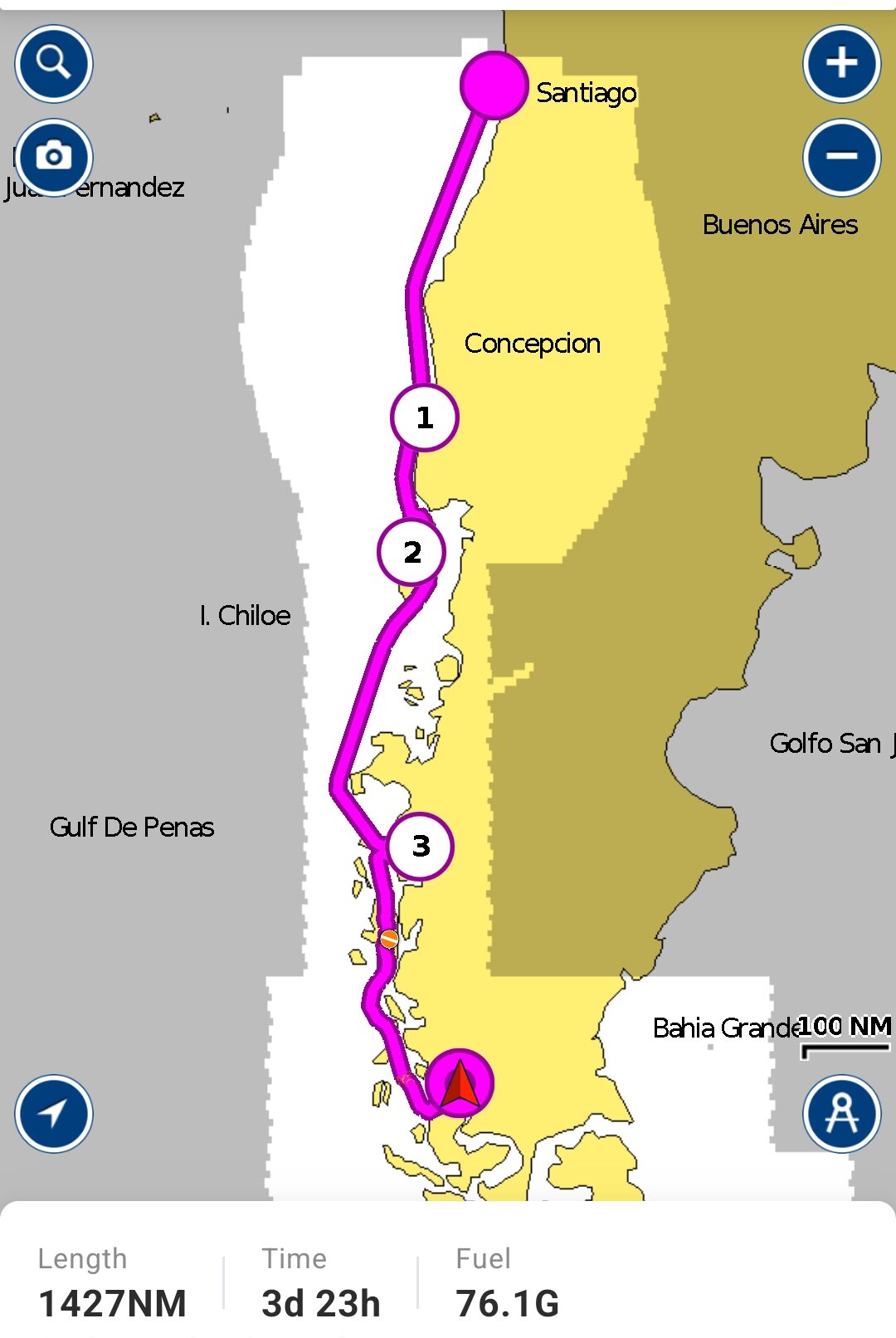
I’ve been looking forward to this trip for so long, and suddenly the first week has come and gone. We’ve traveled 1,451 miles by sea, had every night on passage so far, with four days at sea and four days exploring small towns in Chile.
| Date | Day | Destination | Miles | Total |
| 10/17 | Fri | Valparaiso | ||
| 10/18 | Sat | @ Sea | ||
| 10/19 | Sun | Niebla | 461 | 461 |
| 10/20 | Mon | Castro | 211 | 672 |
| 10/21 | Tue | @ Sea | ||
| 10/22 | Wed | Caleta Tortel | 411 | 1083 |
| 10/23 | Thu | @ Sea (Pio XI Glacier) | ||
| 10/24 | Fri | @ Sea | ||
| 10/25 | Sat | Puerto Natales | 368 | 1451 |
| 10/26 | Sun | Puerto Natales |
Here’s a list of our days and where we’ve been. The first two days at sea were really rough and rolly. We were outside any protection from the Pacific Ocean swell, the wind was howling on our nose and we were bashing into big seas. The boat was pretty quiet and I’m sure lot of folks were quite seasick. It felt great to turn in and find a quiet anchorage in front of the town of Niebla. And time for our first excursion.
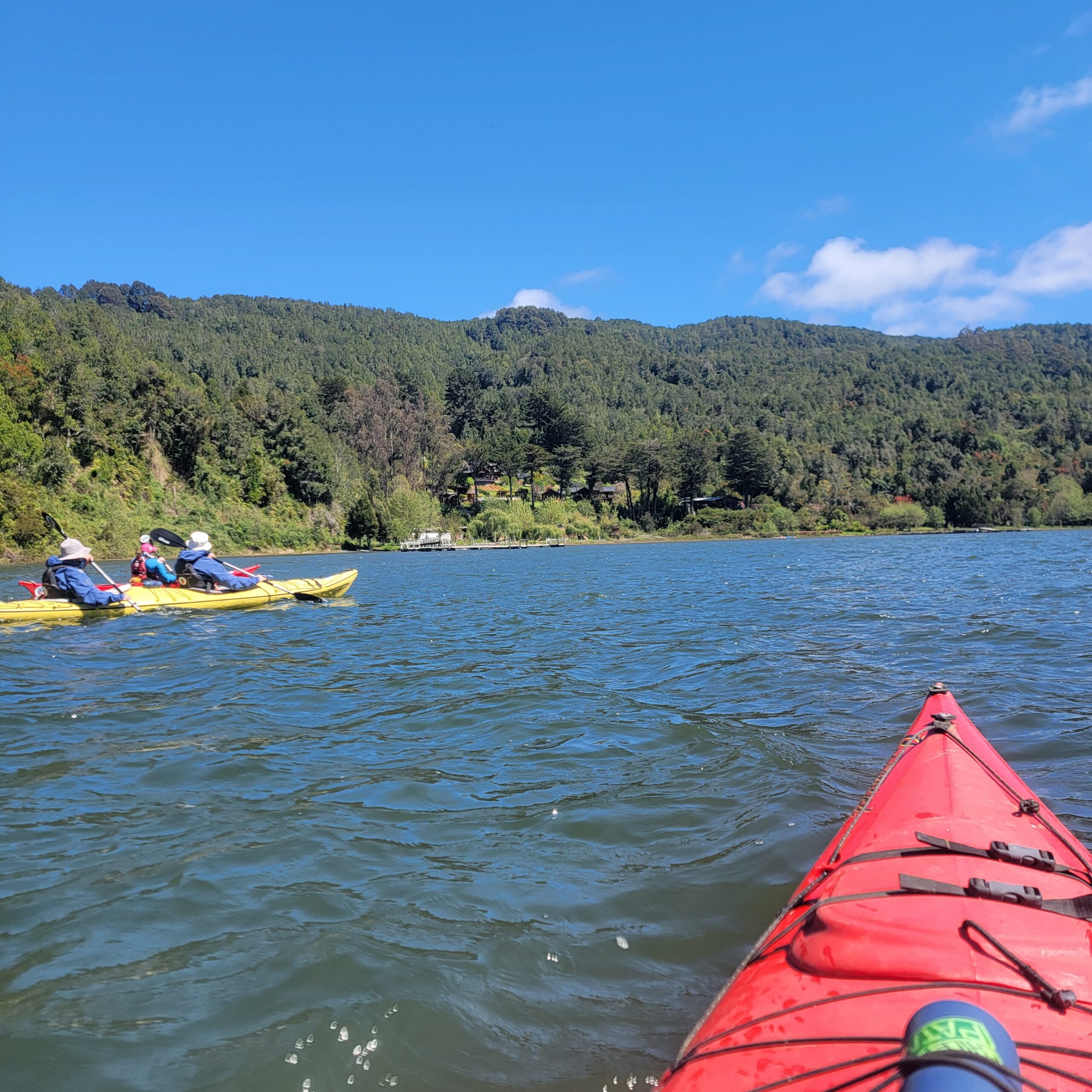
We had found a 5 hour kayak excursion when we booked months ago, and had to make special arrangements to get included. Kelly and Beau and Kim had not been able to get tickets, so went off without them, feeling a lot guilty we were going to have an epic day kayaking up the river in the mangroves. Turns out we couldn’t have been more wrong, it was a complete failure. We ended up paddling for 10 minutes, making a big raftup in the shoreline for coffee, then floating back for 5 mintues. We were all pissed, it was $454 completely wasted. But Hurtigruten listened to our feedback and refunded everyone’s money. They truly are a class act.
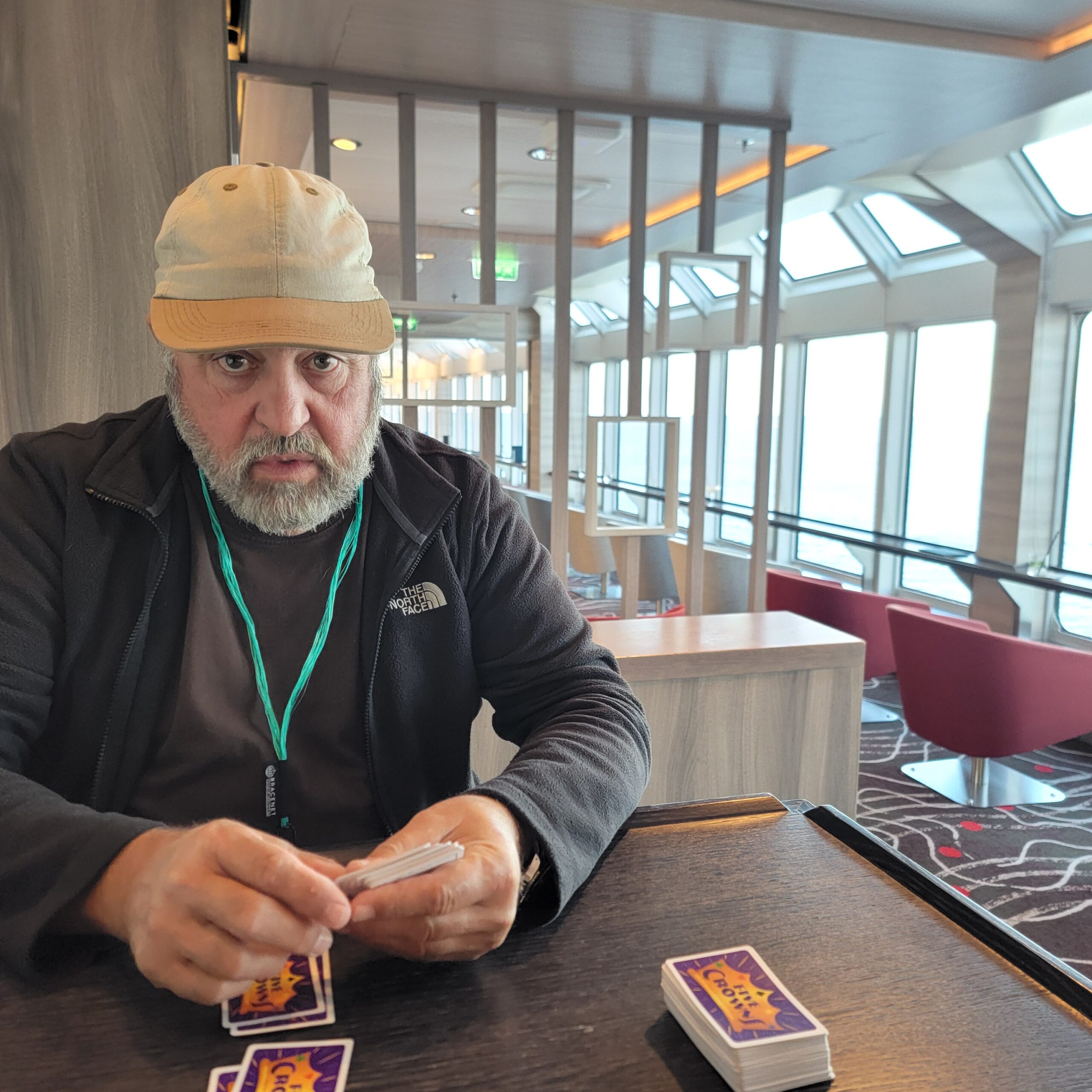
We pulled out of the estuary out back into the rolly Pacific again for another 8 hours. Again it was real quiet and not many people were moving around, but Rob & I felt fine. We played cards in the lounge and just like when we’re aboard our boat and it’s rough out, we just waited for it to get over.
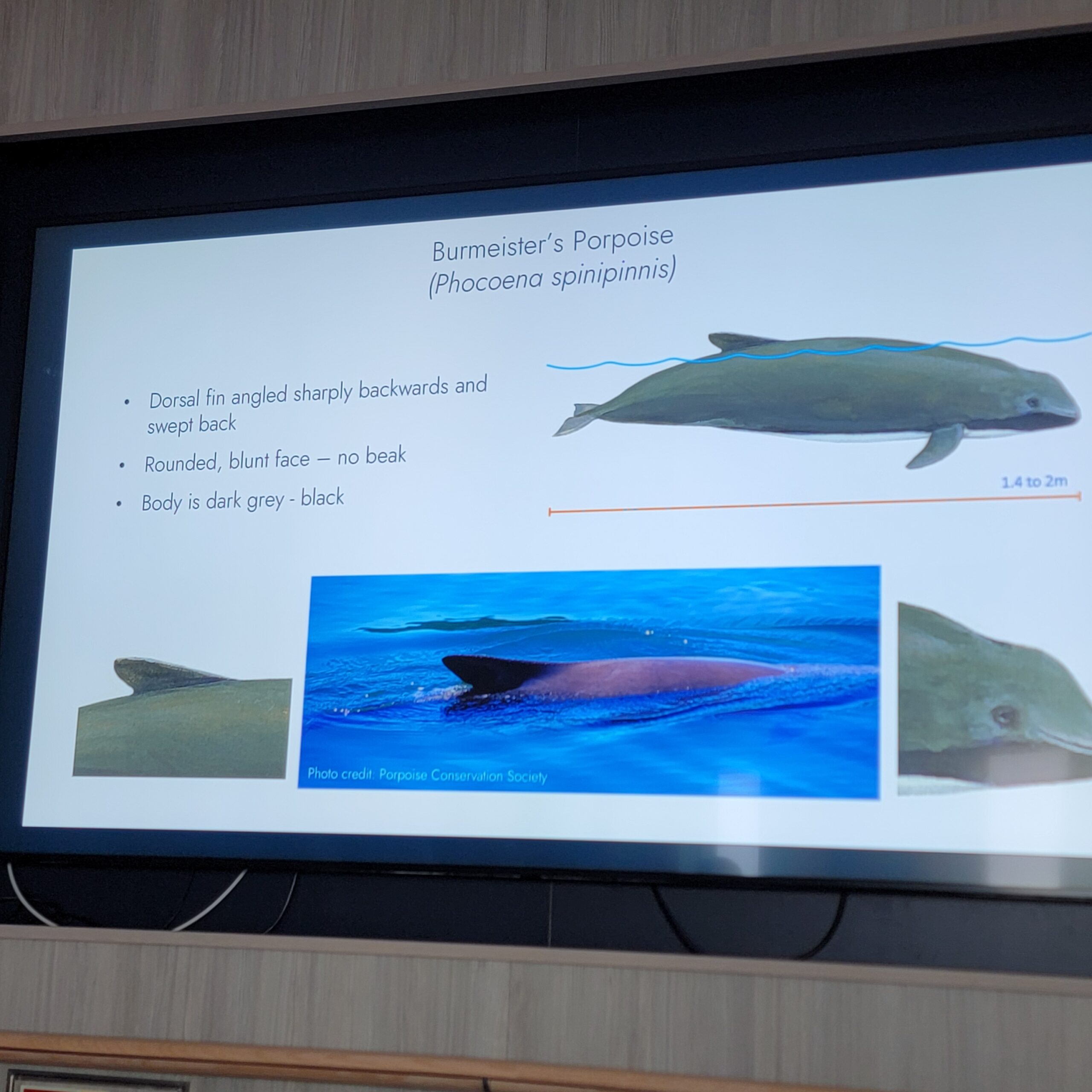
We went to hear a talk from one of the scientists aboard who is a whale specialist, and learned quite a bit we didn’t know about whales and dolphins.
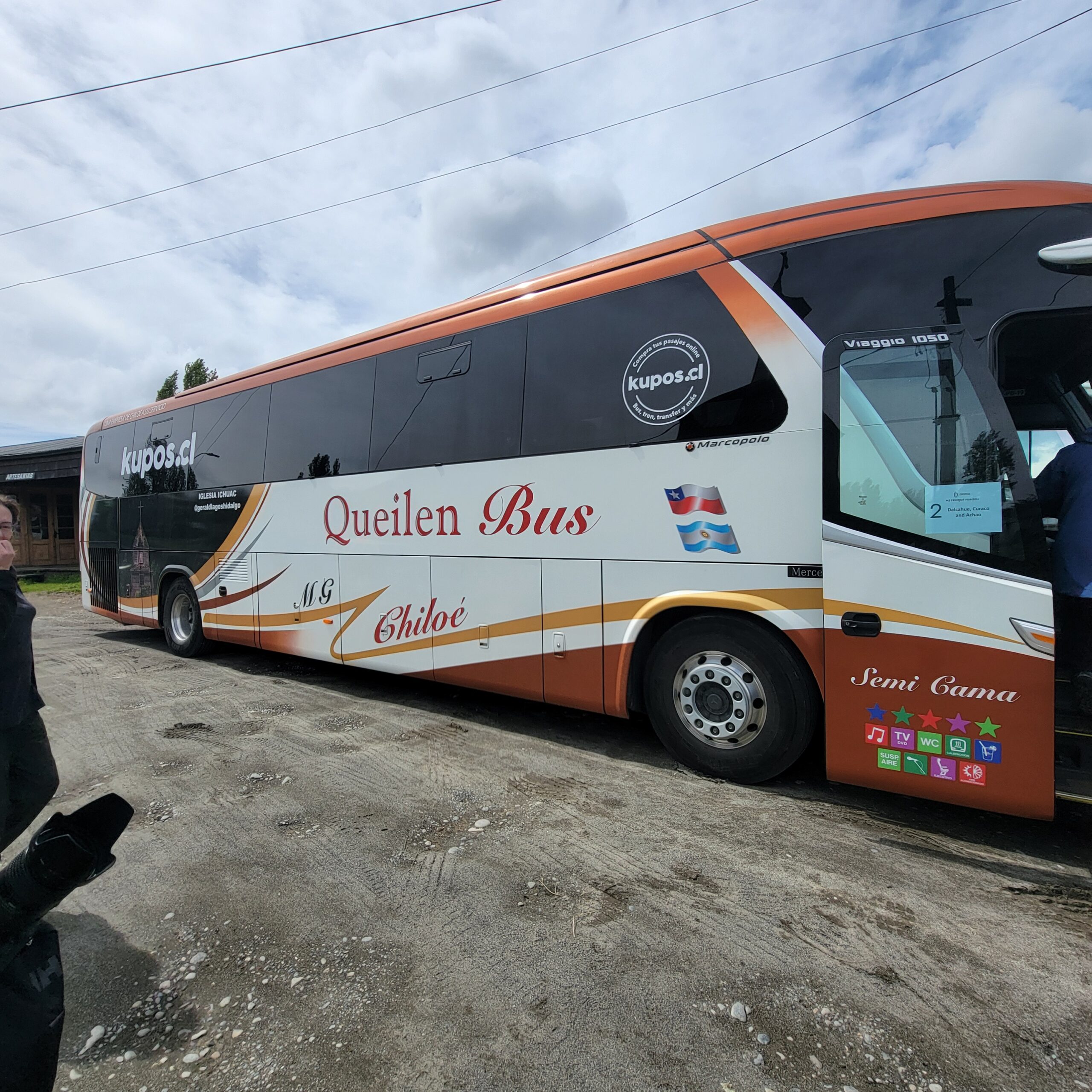
Finally we were out of the Pacific and into the inland channels of the archipelago. Interestingly, they do not anchor this boat when we stop. There are thrusters on all four corners, and it just sits in one position. I’m sure there is a button you set somewhere that says “stay right here” and it talks to all the engines and manages holding position using the bow and stern thrusters. There is an open house in the bridge coming up, which I’m very excited to get to see. At this stop we had booked an excursion on a tour bus to see the local countryside and islands. What I didn’t realize when I booked this is that we had driven over a week in the Chilean countryside and didn’t really need another driving tour. But nevertheless, here we were.
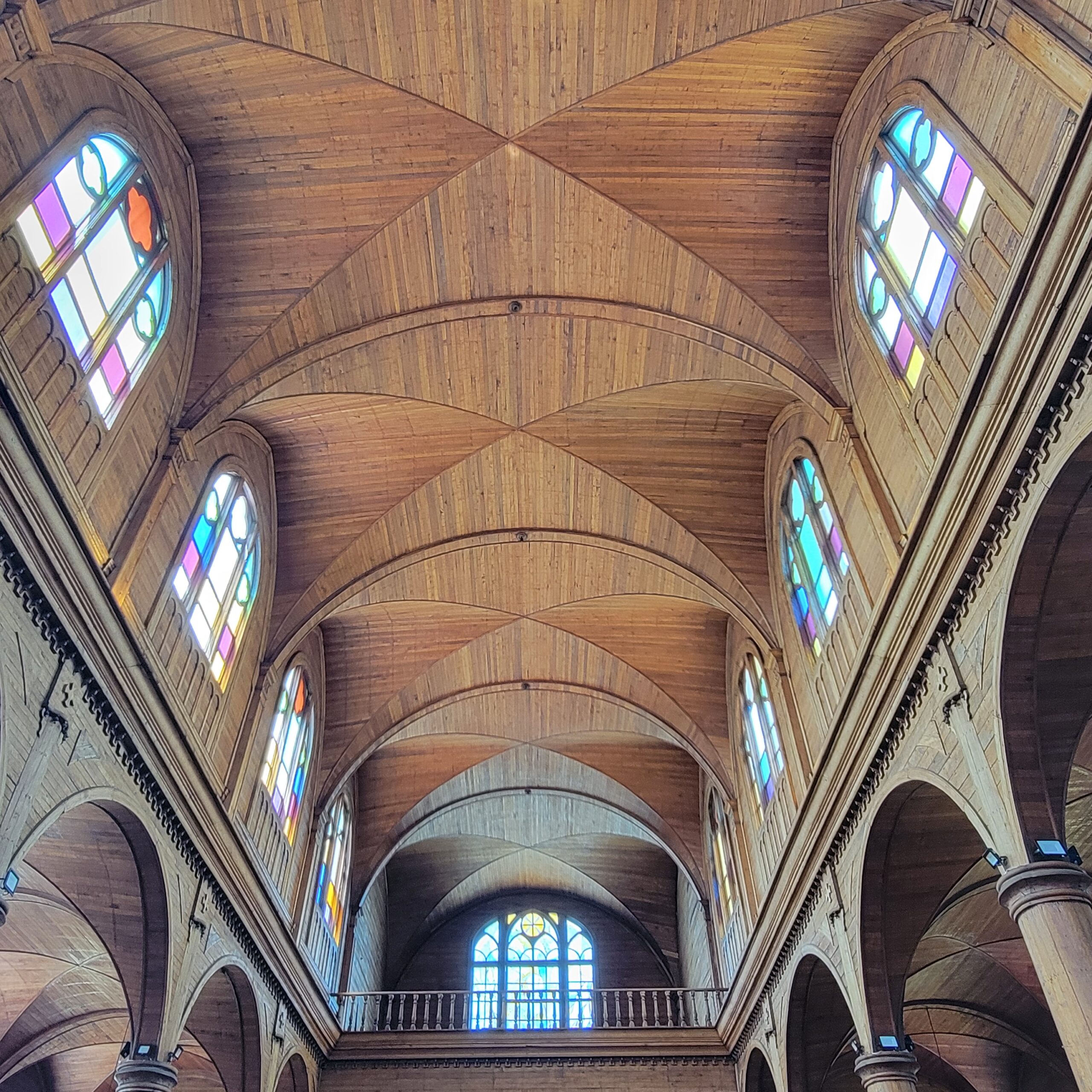
We toured some interesting churches. This one was all built of wood. Something happened to the ship bringing in the stone to build it, so they improvised and used some of the wood that is so plentiful in the area. It was actually very unique and quite gorgeous. After a couple of stops off the bus, into a church, then back on, the guide apologized because the last few churches we were supposed to see were unavailable that day. Really, it was ok. We took a little 8 minute ferry ride over to another island.
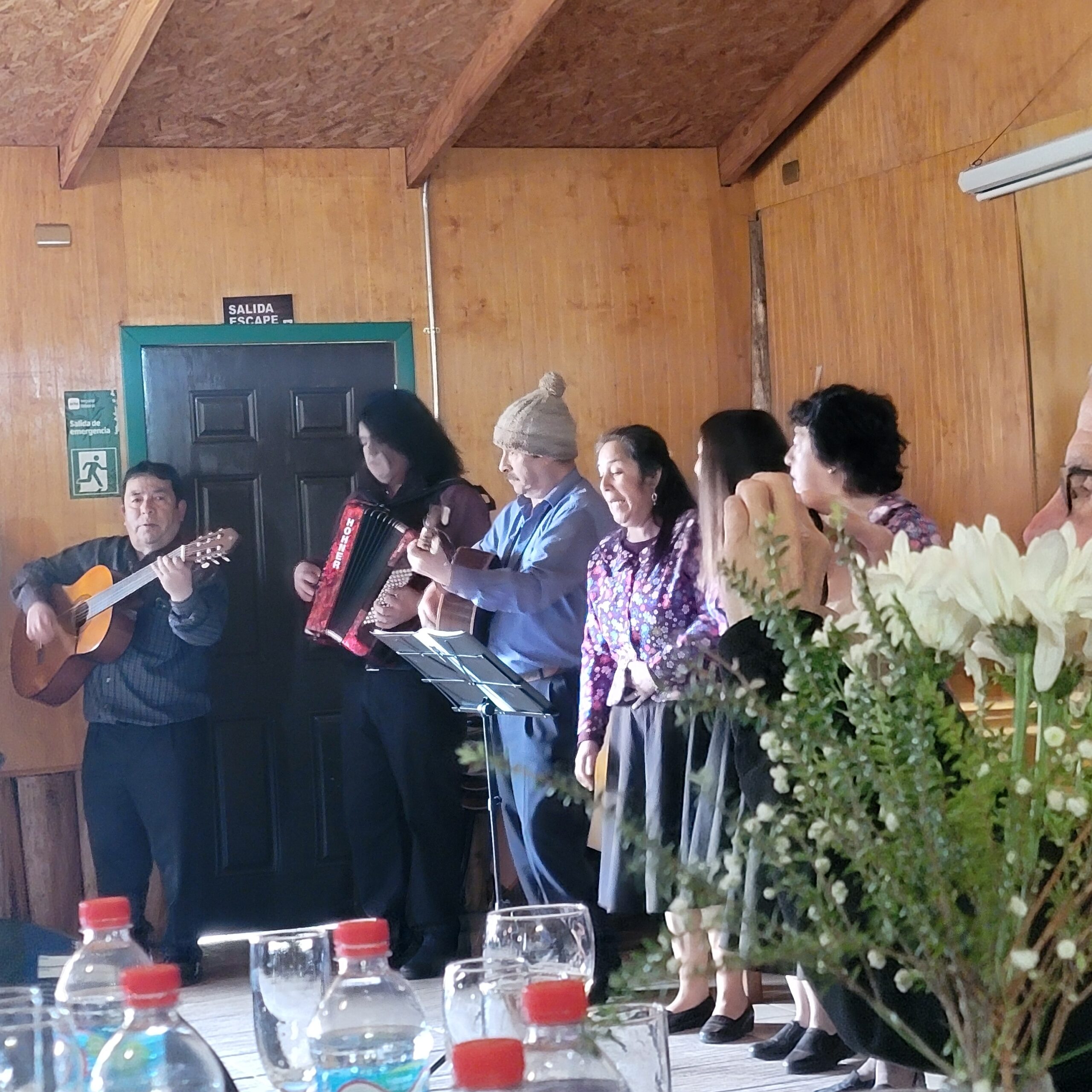
After a 20 minute drive across the island we stopped at a little house with tables set up in a barn and local mucisians. They had a pisco sour and empanadas and music. Yes, we had officially become our parents. It was nice, but not really my thing.
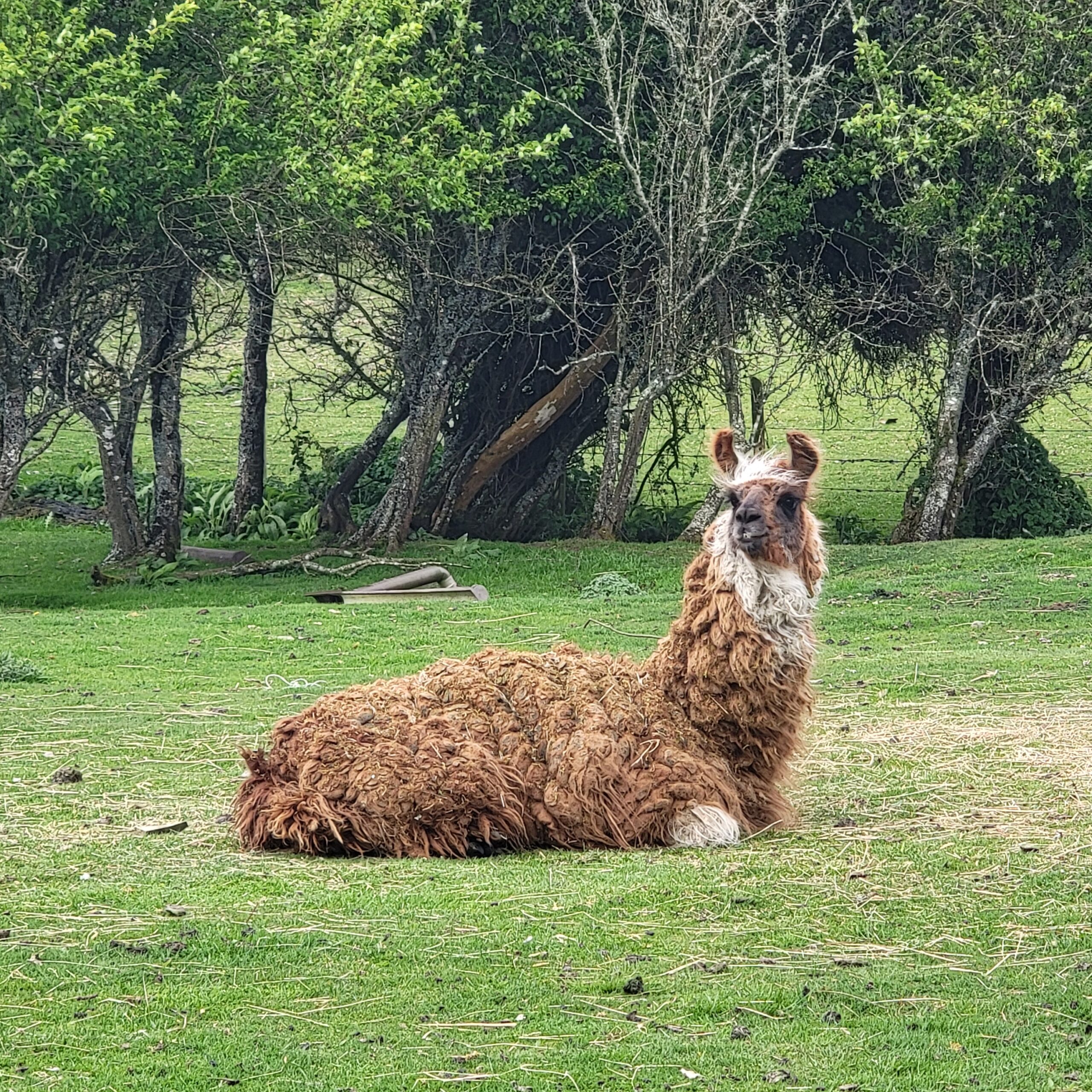
After the music we did peek around back and found this cute llama sitting around ready for a photo shoot.
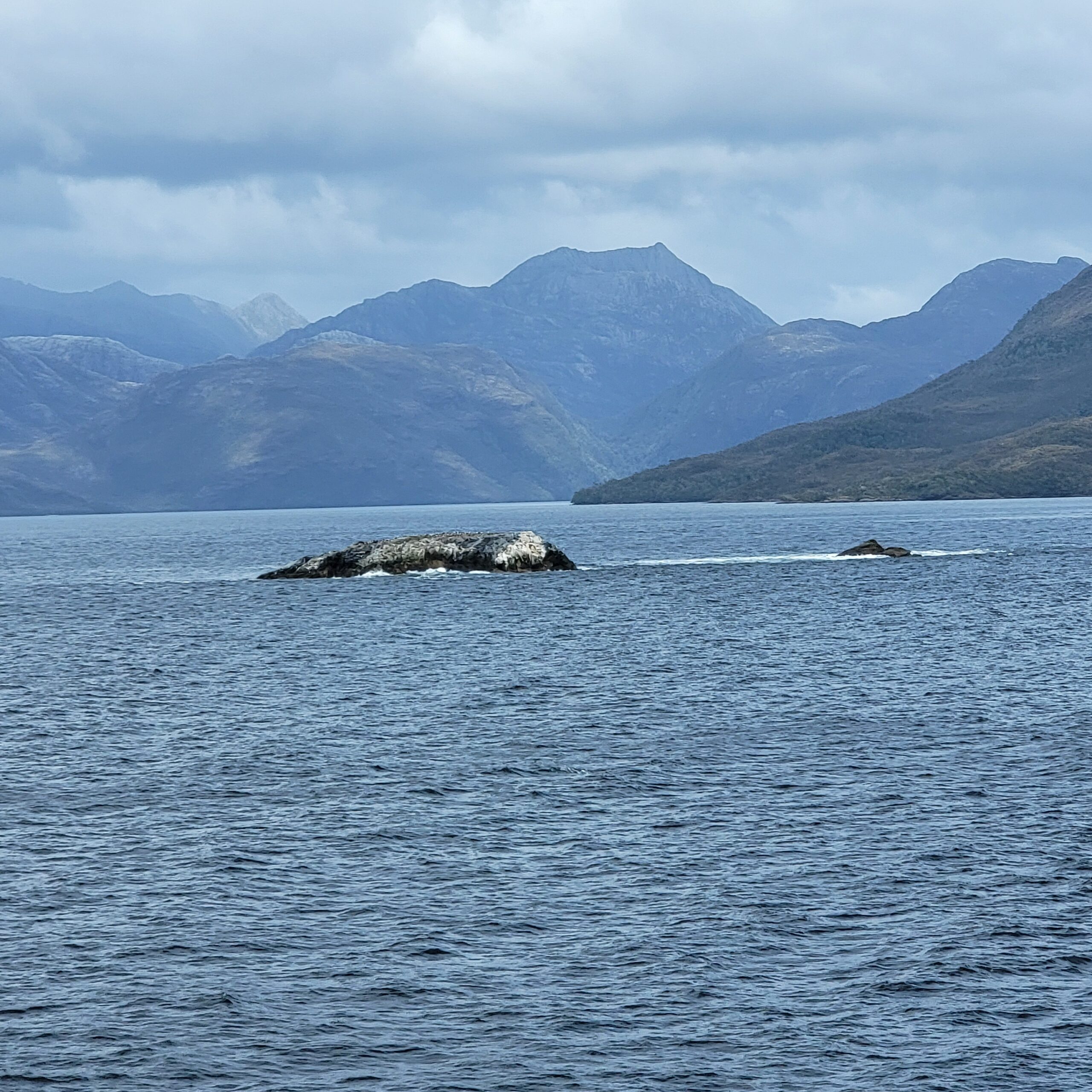
We continued inland into Patagonia’s channels and the scenery out both sides got more and more interesting. As expected, the waterways resemble the Salish Sea and Alaska, but who ever gets tired of looking out at this?
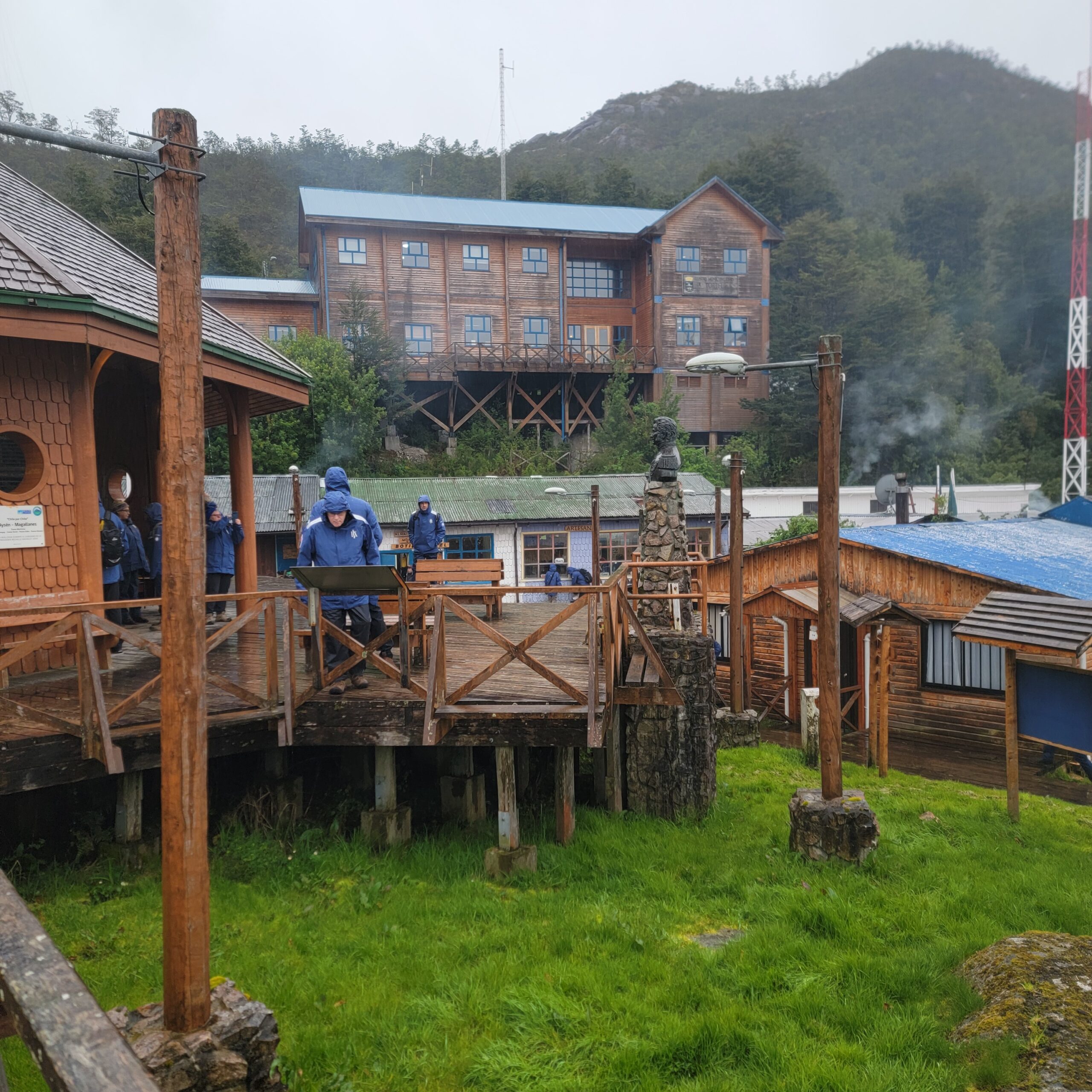
The next day we pulled into the tiny town of Tortel in the pouring rain. There was a long boardwalk like Bamfield on Vancouver Island, so we had a chance in the rain to stretch our legs. Again we had pisco sours and empanadas and local kids singing and dancing.
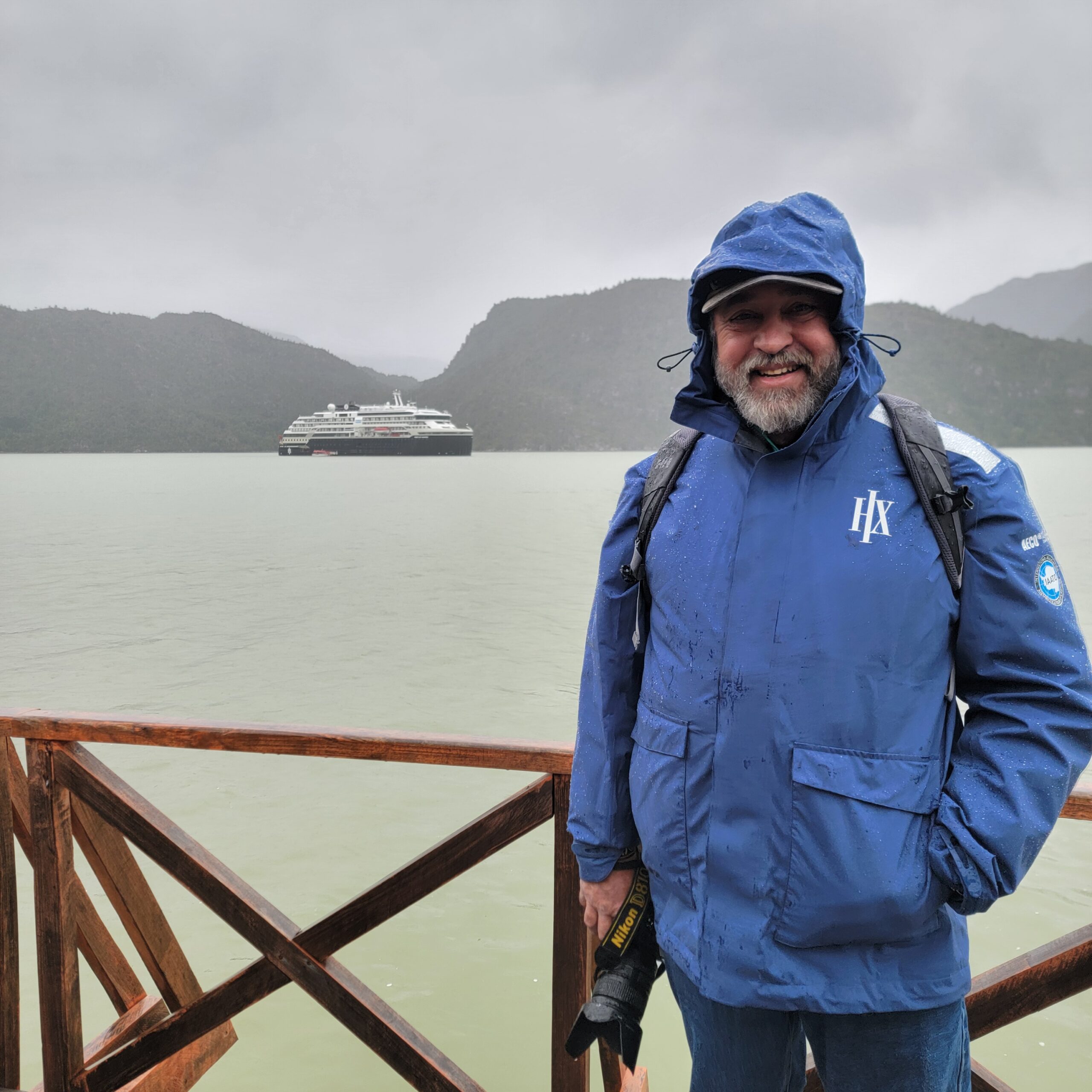
There was a 5 mile walk out to a waterfall that we were looking forward to, but honestly in the pouring rain, we passed and went back to the boat.
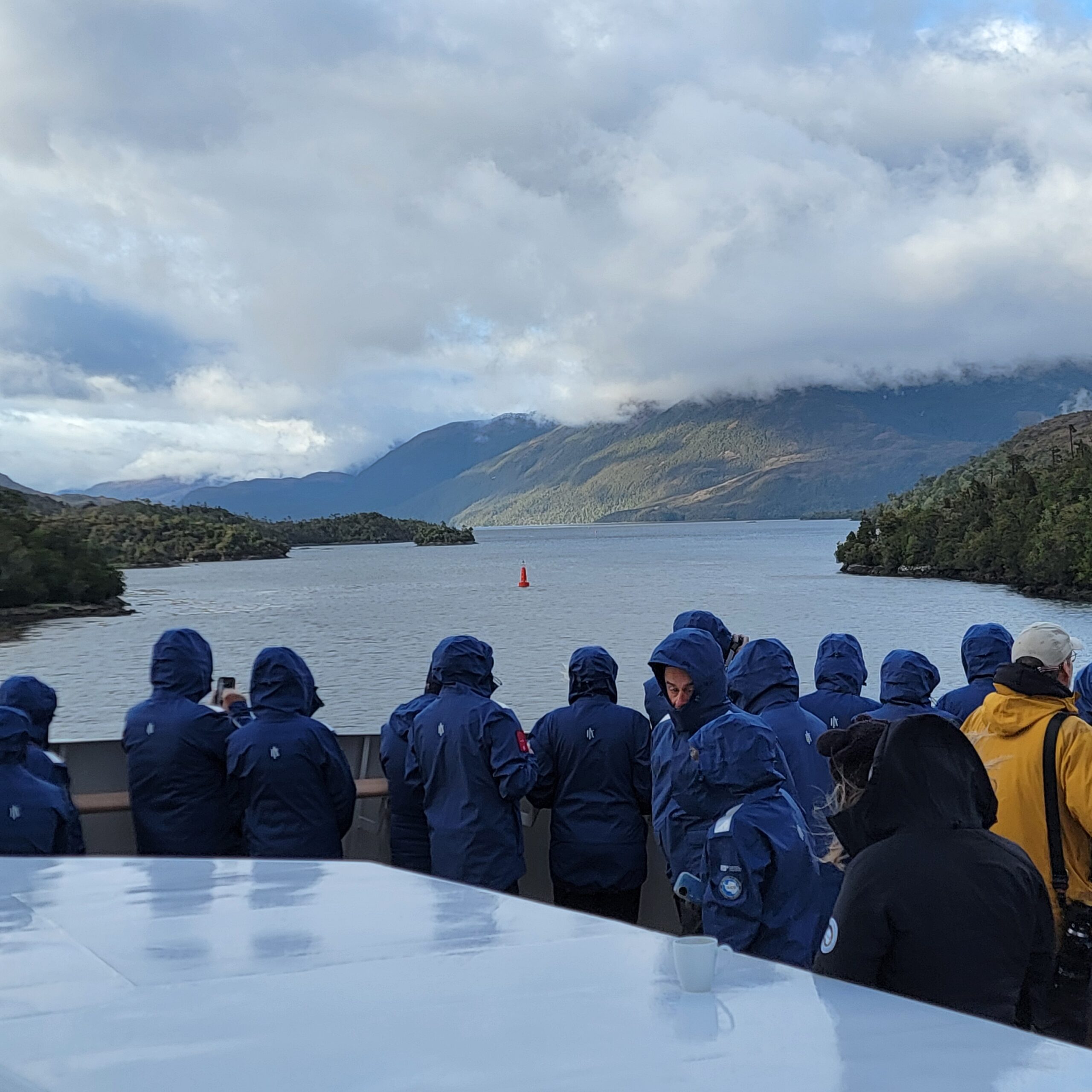
That night we slowly motored south. Things outside started to get more interesting as we began traversing narrow channels with tidal currents that the captain had to navigate at slack tide. This is something we have much experience at from our travels at home, but it was still fun to be out on deck watching someone else worrying about the speed of the current. And the scenery was really gorgeous.
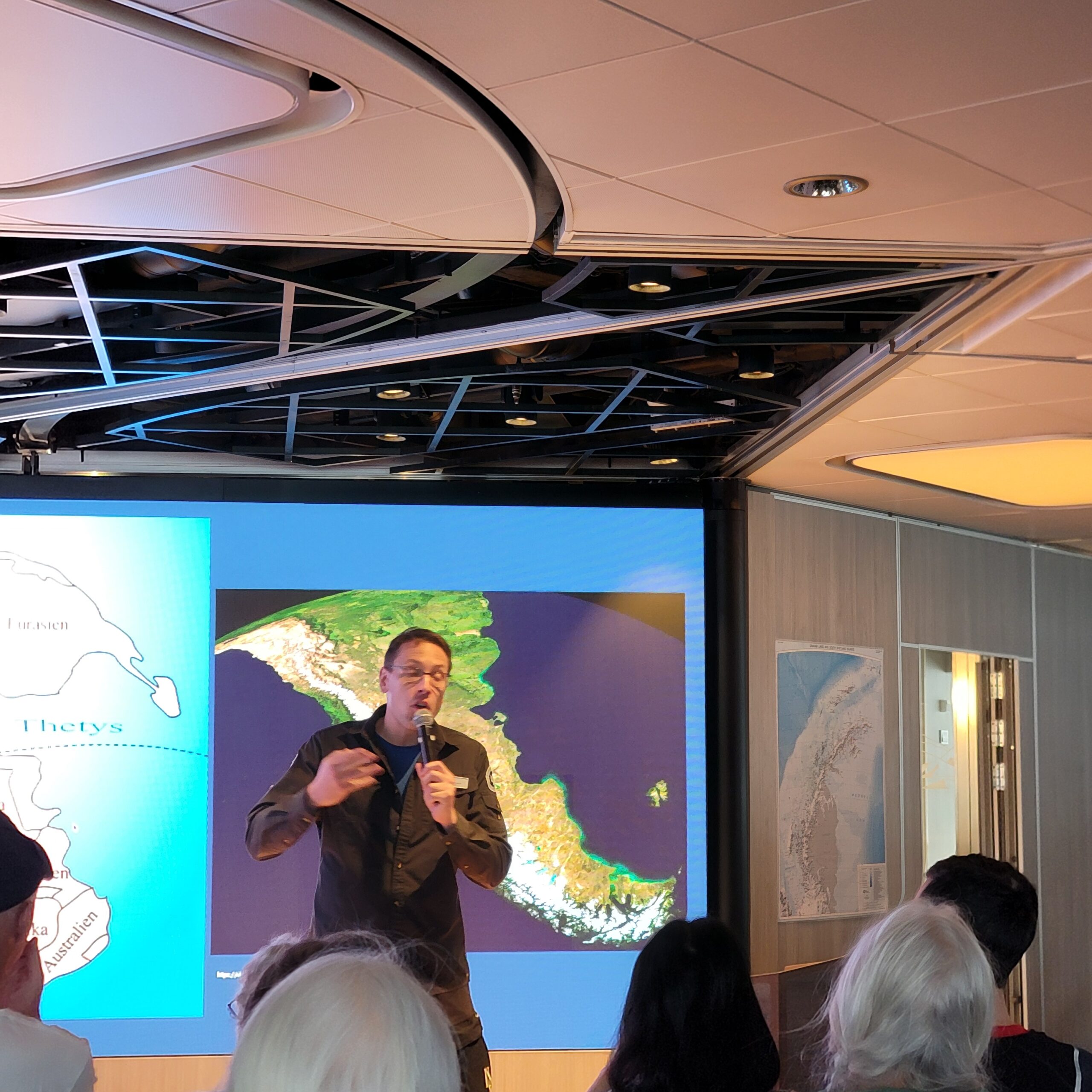
I watched another talk from a German PhD geologist, who taught us about all the techtonic plates in the area and how everthing interacts. It was really interesting and very informative.
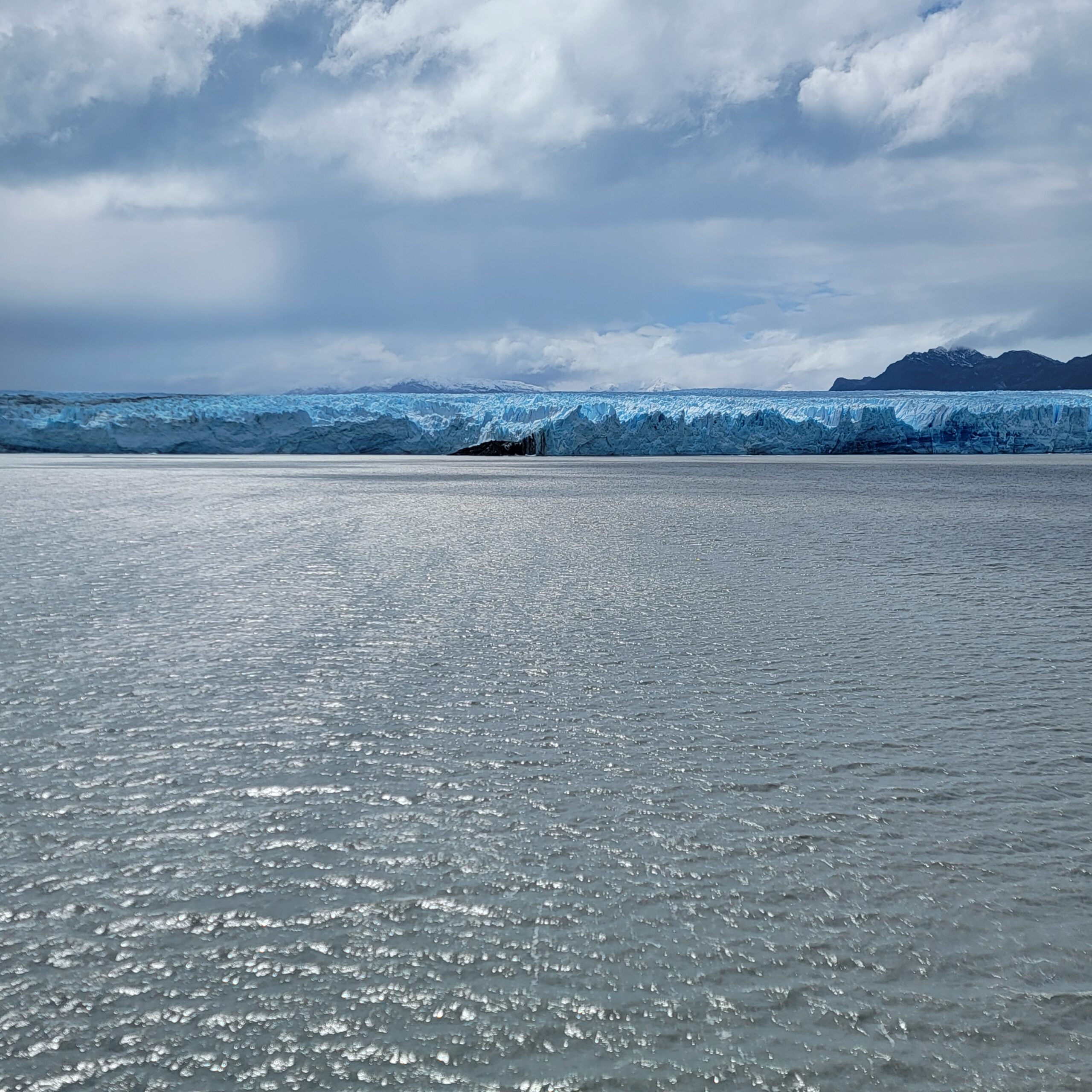
Then it was time to visit one of the most gorgeous glaciers I have ever seen. This one had recently done a lot of calving and the entire face was strikingly dark blue. It calved a bit on both sides while we watched. The ship was much closer than we would have taken our own boat, and we enjoyed watching for an hour.
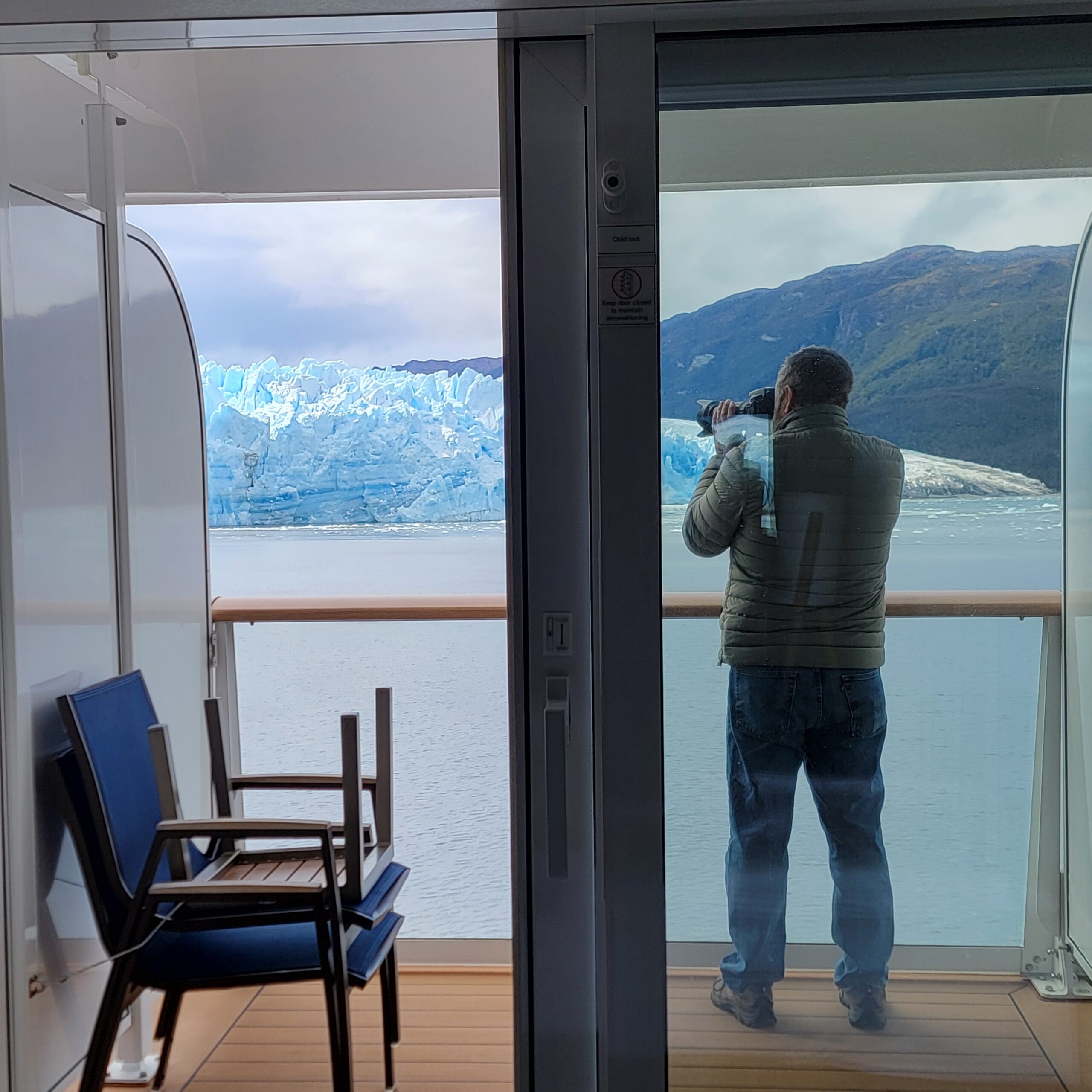
Rob went into our cabin and we watched from the balcony as the ship slowly turned and motored away.
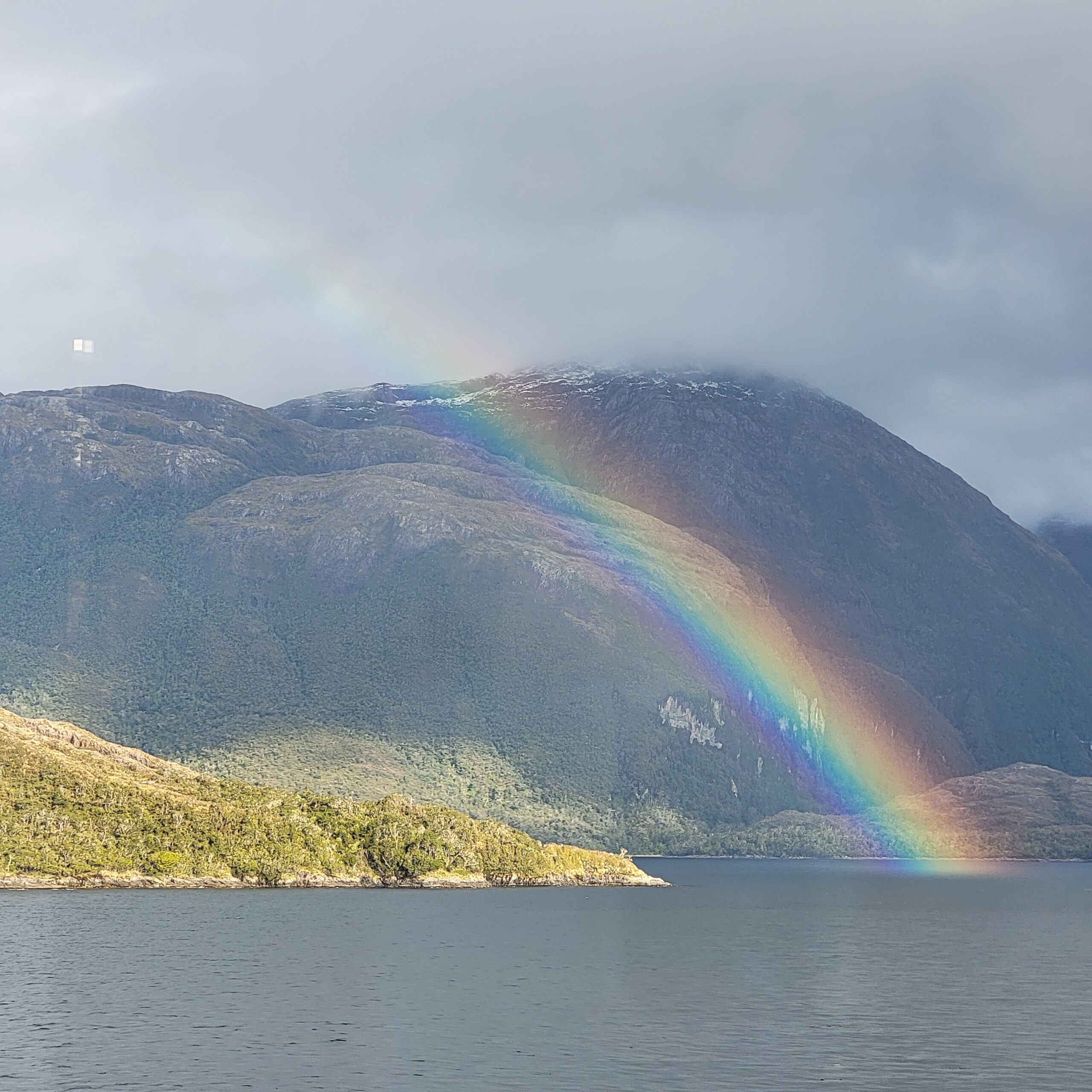
One thing we have seen many of are rainbows. The clouds and small rain squalls roll over us and the resulting rainbows are often quite striking and colorful. But you have to watch quick, they will come and go in a matter of seconds.
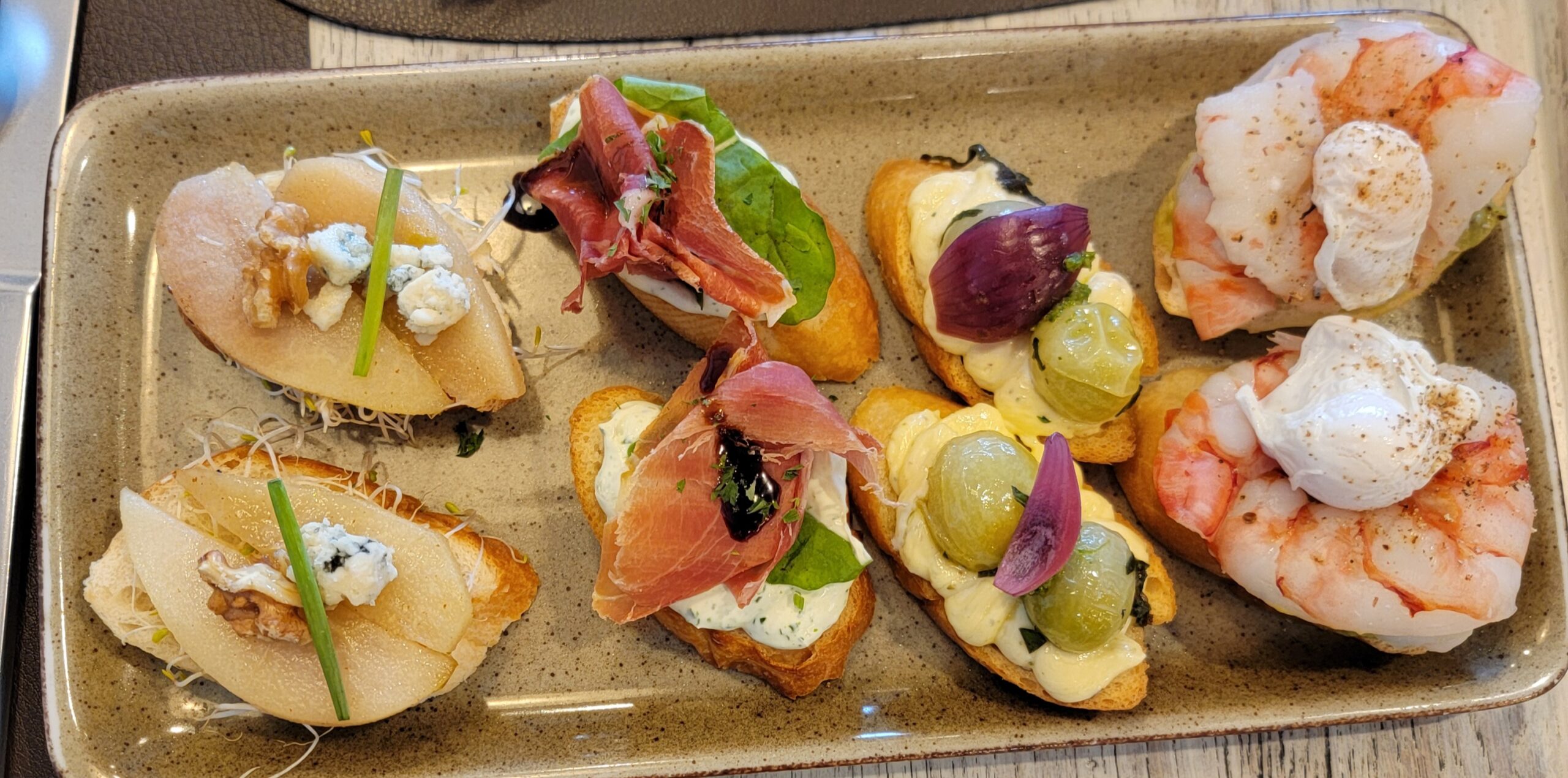
One of the restaurants aboard does a themed dinner, and we try and get a table to each one. This was an Italian theme, with some very interesting and delicious bruschettas for the appetizer.
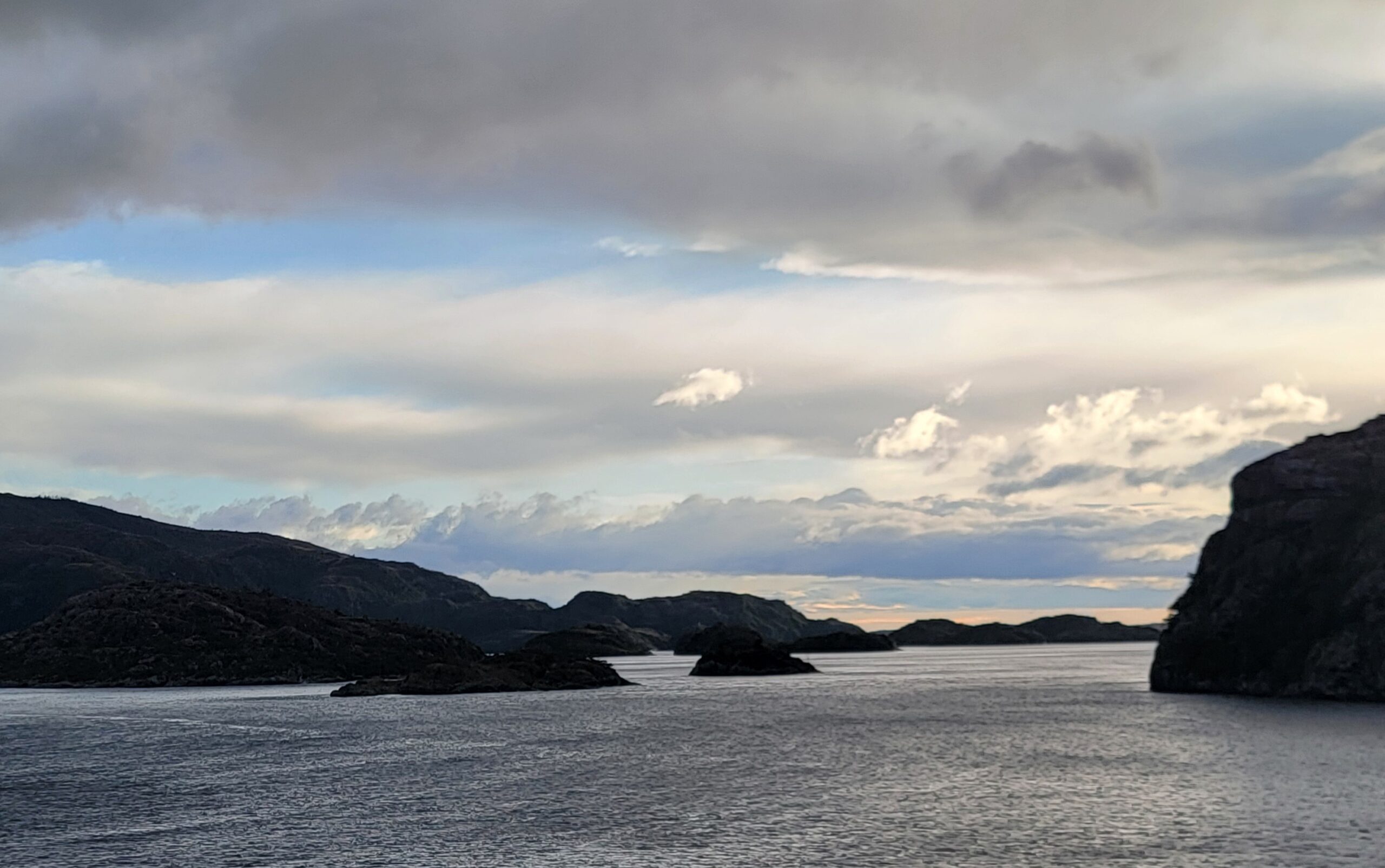
Our way into the village of Puerto Natales required navigating through a very skinny passage called White Narrows. The tides are very small here, but there is still much water behind the narrows, which will make for big currents. The captain stopped the boat and sent out a tender to measure the current before we passed through. It looked in person a lot closer than it looked on the charts, but was still quite striking.
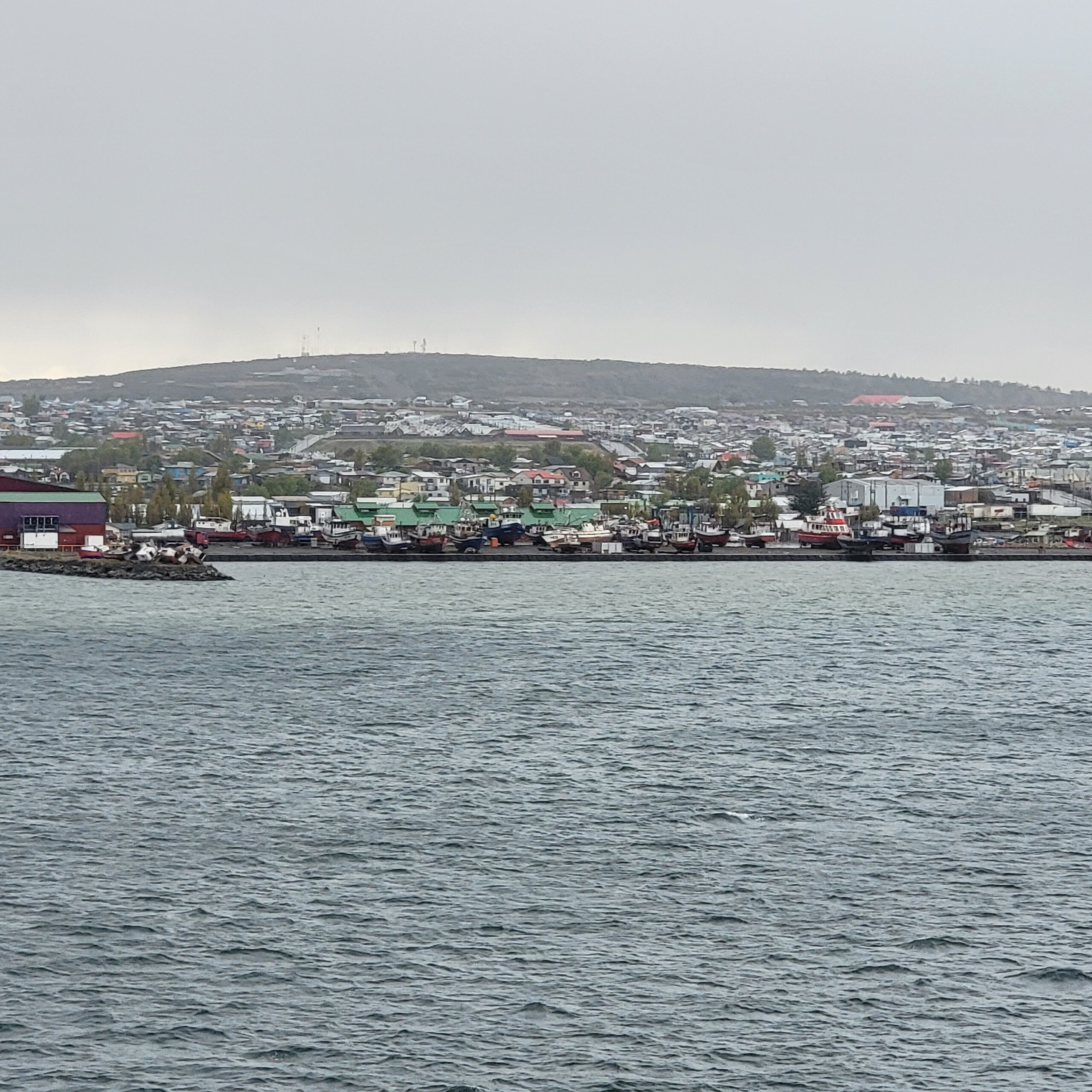
Here we are passing by Puerto Natales, where we’ll sit on a dock for two nights. When we landed there were four huge tanker trucks to refuel us. We later learned from the Captain that they refuel here because it is so much less expensive than Ushuaia. We’ll visit town in the afternoon, then the next day is our excursion to Torres del Paine National Park. It is the stop I am most looking forward to, so fingers crossed for no rain.
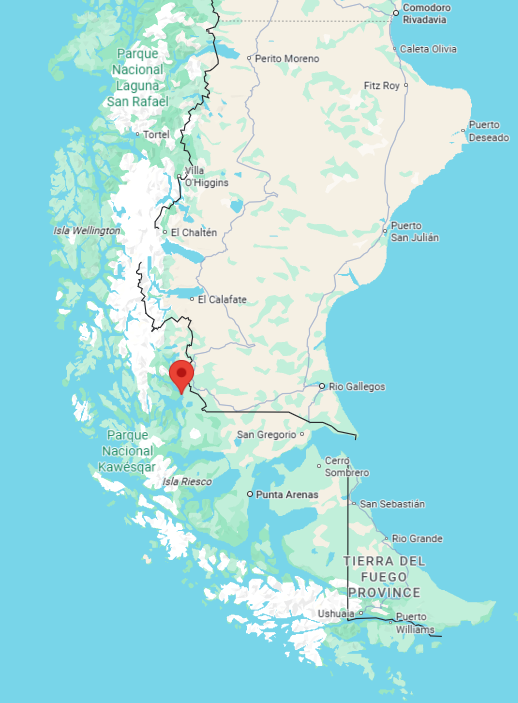
Interestingly, the maps show us east of the Andes mountains here. The park is actually northwest of us.
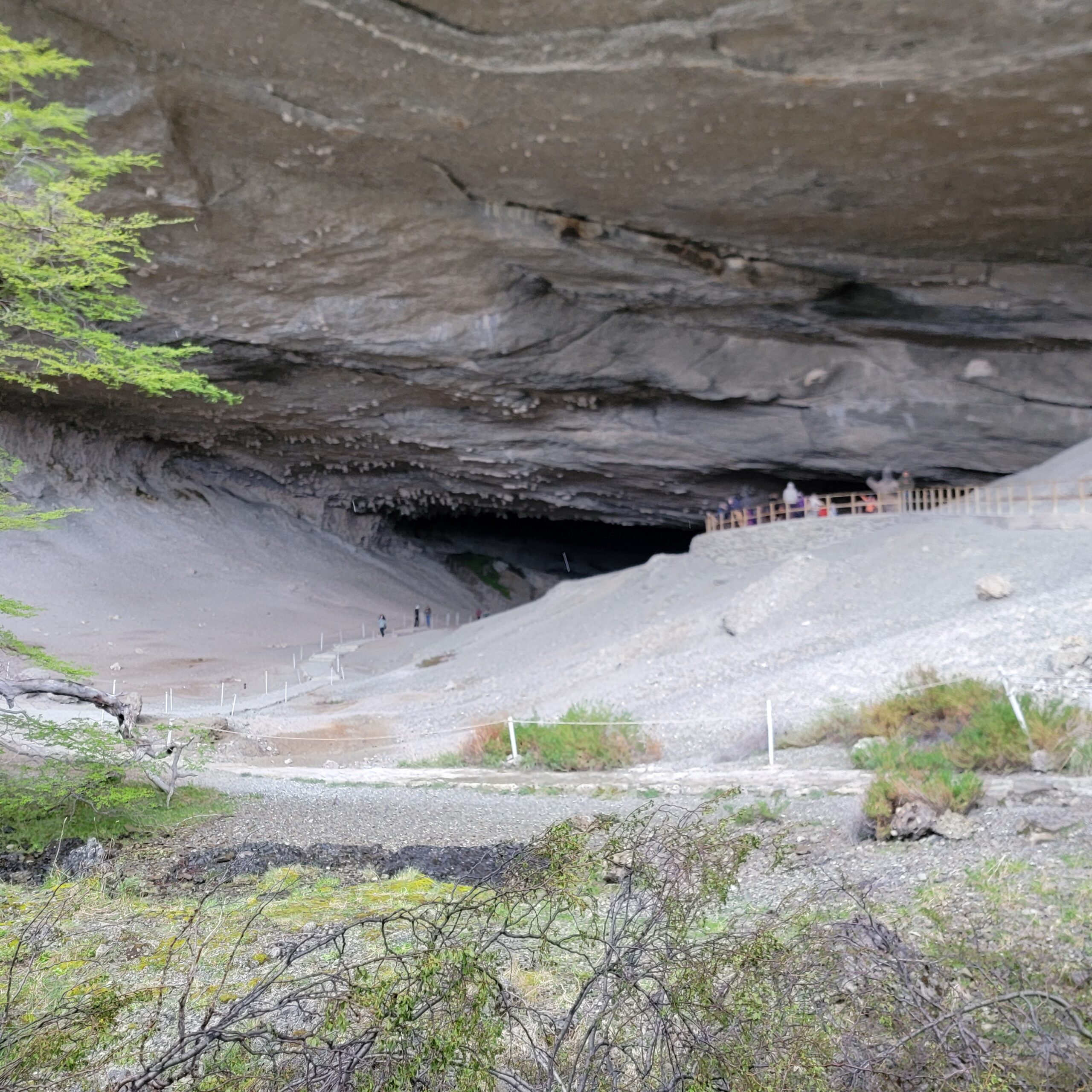
During our afternoon off the ship we had three missions. Find some good hiking shoes for Kim and a warmer sweater for me, get some lunch, and make a visit to Mylodon Caves Natinonal Monument. The monument includes a cave which is notable for the discovery in 1895 of skin, bones and other parts of a huge ground sloth called Mylodon which is now extinct. It was about the size of a small bear. The biggest cave is 600′ deep and it was nice to walk around and stretch our legs. The hike in Torres del Paine was going to be a challenge, but it turns out not challenging at all for the reasons I thought it would be.
