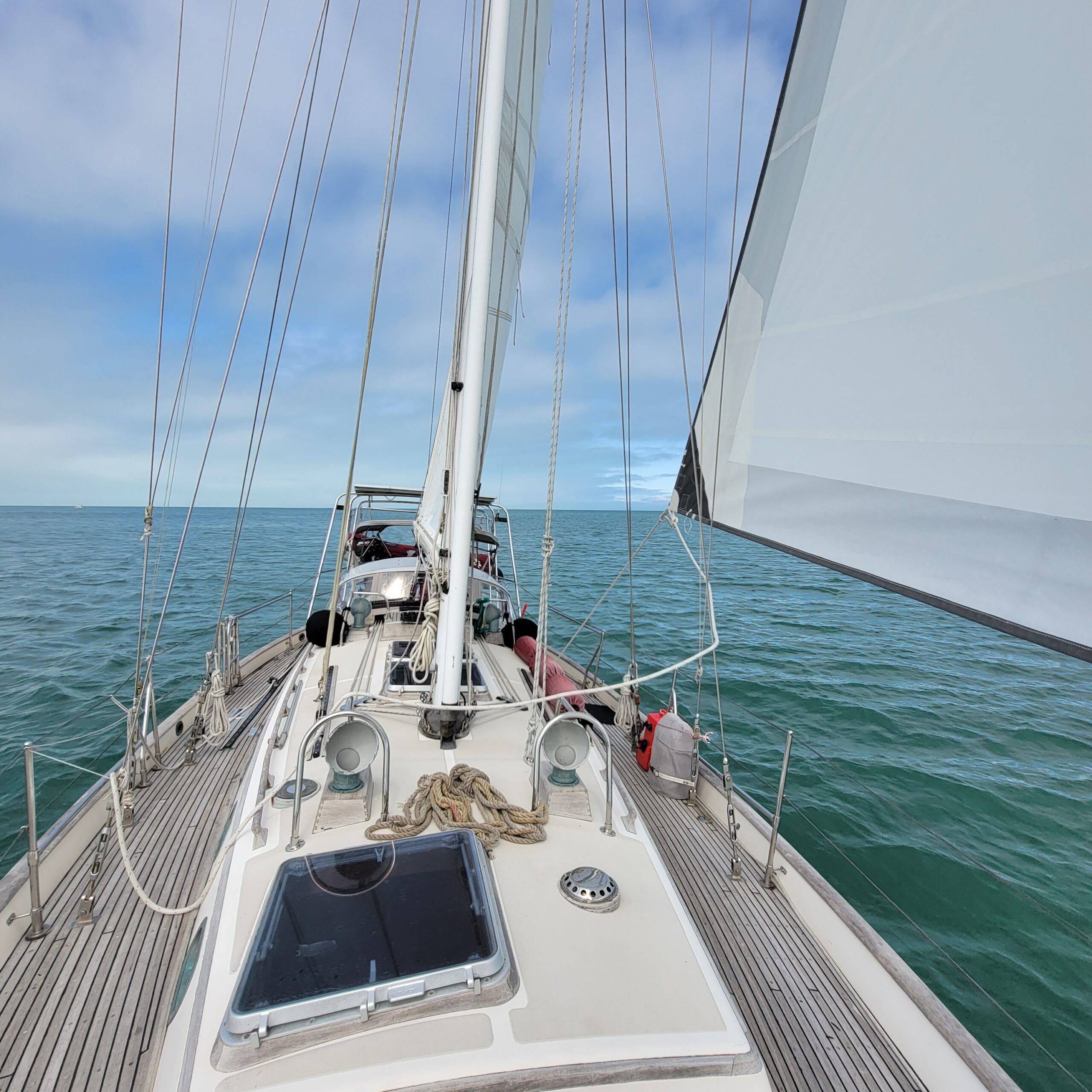
What powers our sailboat? The sails. How are our sails attached to the boat? They’re either in a track on the mast or attached to a wire that is attached to the mast. With our 32,000 lb boat, there are tremendous amounts of force applied to those sails/mast/wires to move her through the water. Deisgning the right sailplan includes properly sizing the sails, wires and attachment points.
Often times you’ll see offerings for sailboats that advertise “Oversized wires and rigging”. We learned decades ago from our original rigger Brion Toss that this is not an upgrade. A boat’s sailplan has optimal specifications for the size of the wires that hold up the mast (the standing rigging), based on the boat’s righting moment (its resistance to heeling), displacement, and mast/sail dimensions. Increasing the size of the wire only adds weight aloft and disrupts the balance of the boat. Already we know that size matters, and oversized wires are not ok. Neither are undersized wires.
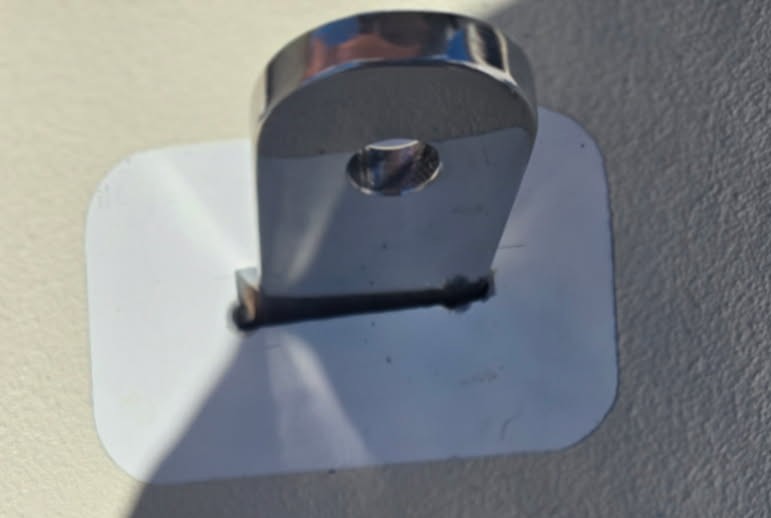
From Wiki: A chainplate is a metal strap, plate, or rod used to anchor the boat’s standing rigging to the hull. It acts as a heavy-duty bridge to distribute the pulling forces (loads) of the wind and sail across the vessel’s structure. All traditional cruising boats like ours have chainplates. Some are external and bolt to the outside of the hull, some are internal and built into the structure of the boat.
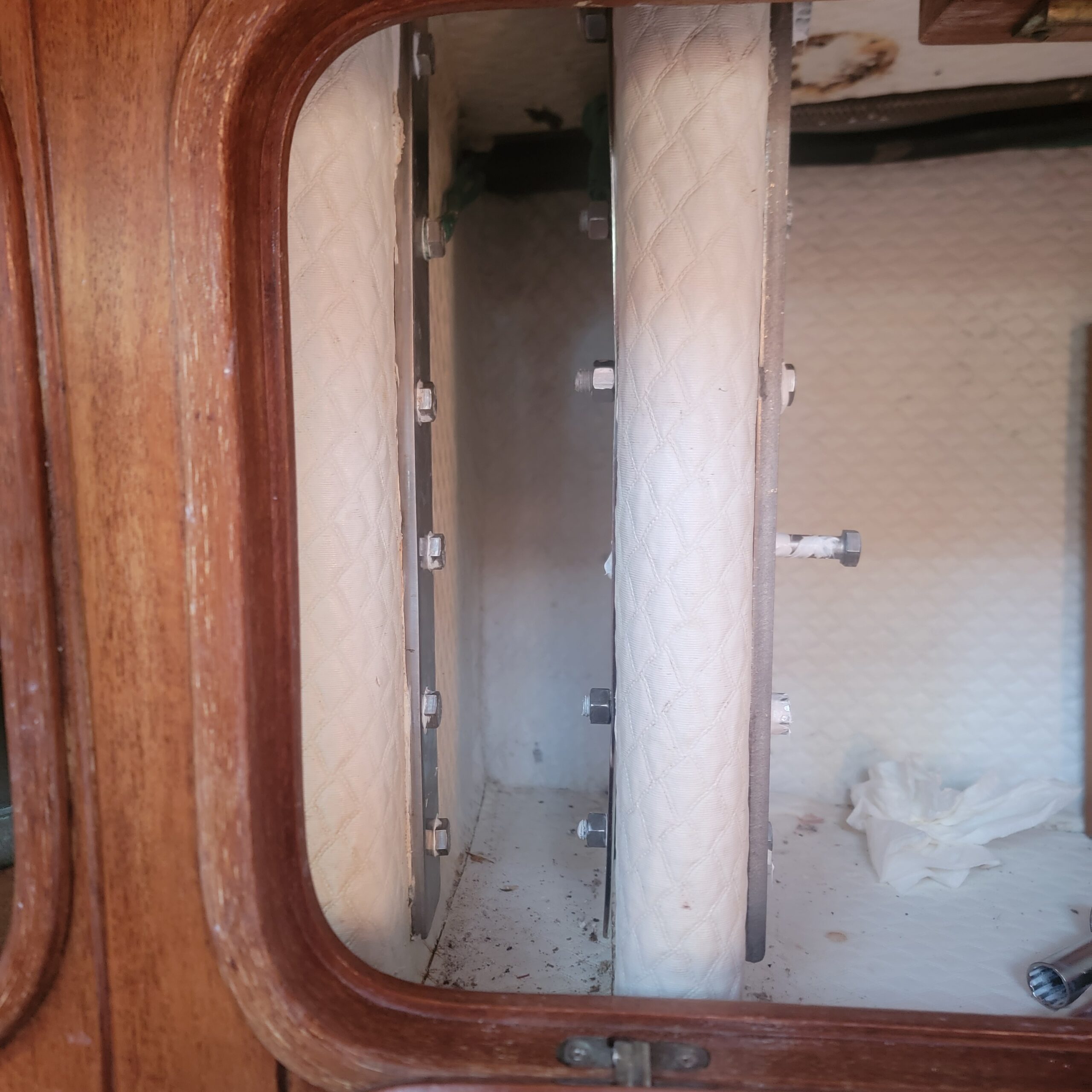
Ours are neither of those, and I think way better. They penetrate an opening in the deck and through bolt to fiberglass knees that are part of the core structure of the boat. This gives us the opportunity to inspect them, and also distributes the weight better across the hull of the boat.
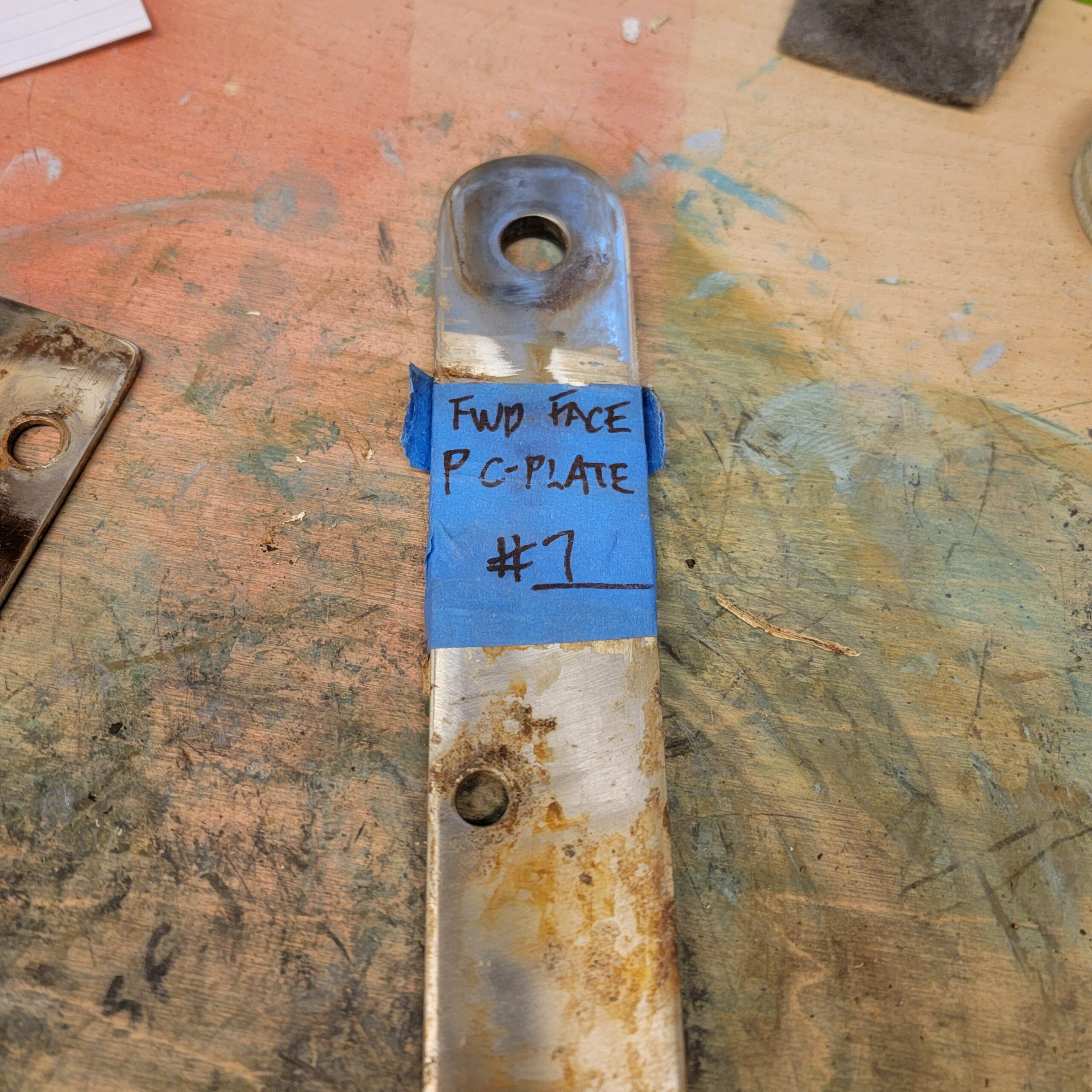
When we refit the boat in 2005 to go offshore, our rigger at the time was a very good stainless welder and convinced us the chainplates were in good enough shape to just need a few touchups with a few welds. Now that the boat is 40+ years old, and we’re not planning another refit after this one, we decided it was a good time to skip the cleanup and have new ones made. We handed them off to the rigger from Anacortes that we were using, who said he would have new ones made and get us an estimate of the cost and have them back relatively quickly.
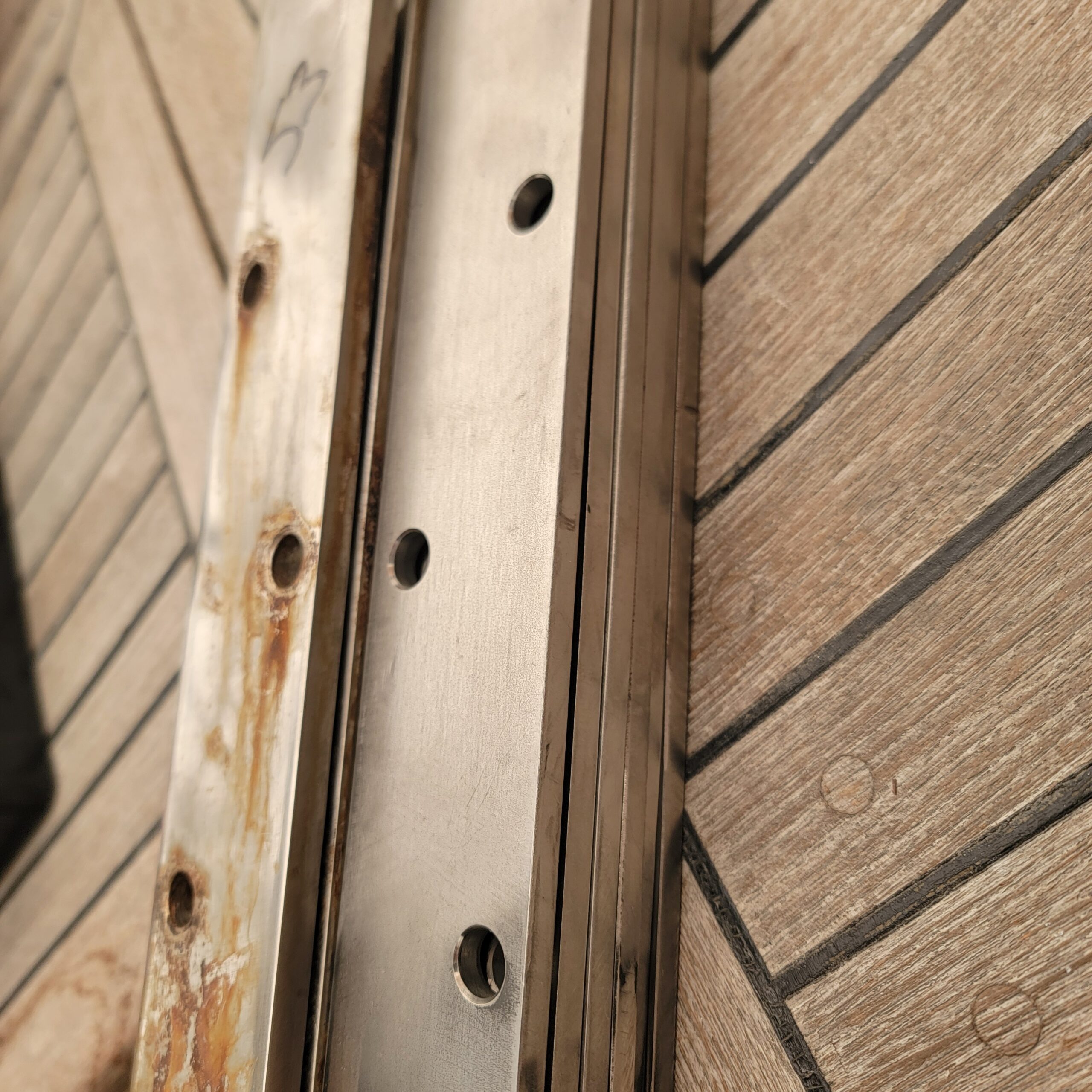
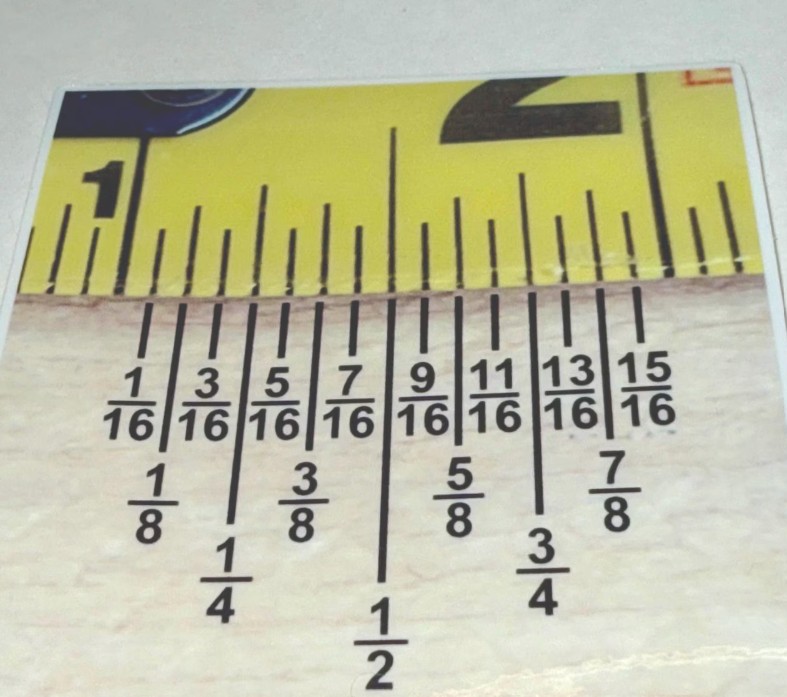
Imagine our surprise when he calls us two weeks later and hands us a stack of chainplates that looked new and shiny, but seemed to not match the stack height of what we had given him. Our chainplates were 5/16″ thick and what we got were 1/4″. You might think a sixteenth of an inch doesn’t matter, but just the entire heft of them felt wrong.
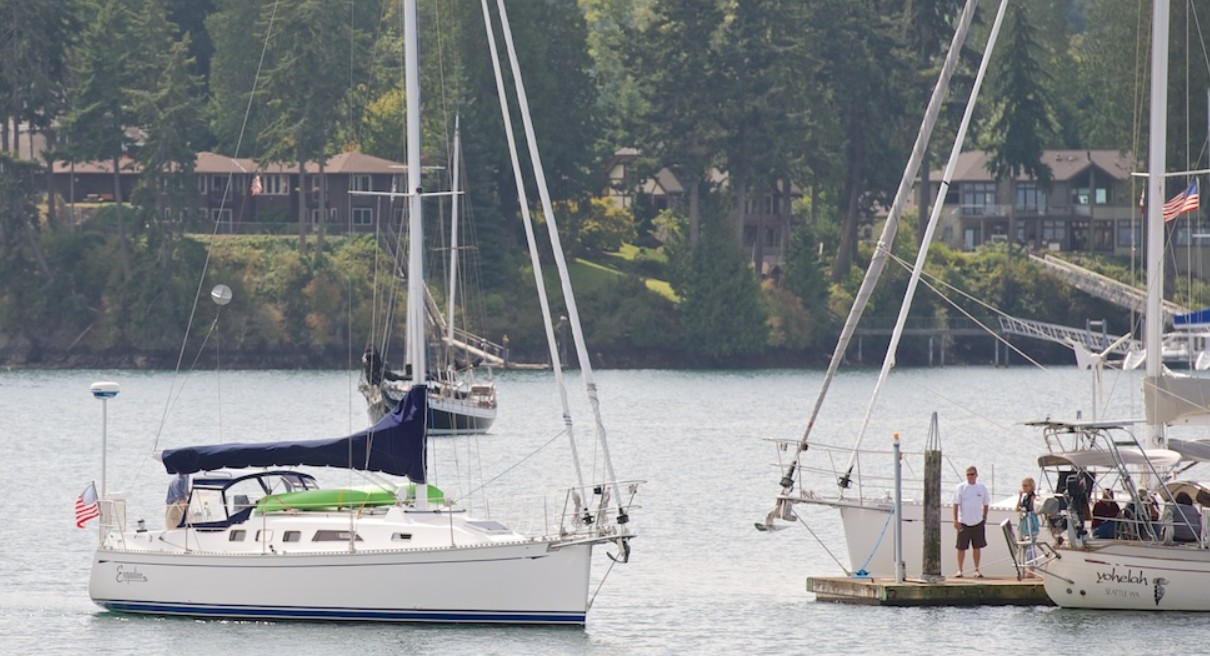
The good news is that we have known Bob Perry, the designer of our boat, for over 20 years. He’s a local guy and we’ve been to many of the rendezvous held in Port Ludlow to celebrate the many different boats he has designed over the decades. Here is a snap from Bob’s website with Yohelah on the dock at Port Ludlow for one of the rendezvous.
Bob is a self admitted curmudgen, and we’re not pals, but I’m not afraid to reach out to him with something this important. We needed Bob’s response to prevent any arguments from the rigger that these were ok. And he responded to my inquiry immediately about whether this sixteenth of an inch mattered. His response was “1/4″ thick chainplates is undersized for that boat. They should be at least 5/16″ and really I’d spec 3/8″ thickness. Bob P.”. For his free (but invaluable to us) advice I shipped him a case of exotic root beers since that’s his favorite drink of choice these days.
Rob engaged a stainless welder in Port Townsend and learned that you can buy 3/8″ stainless bar stock in 2″ widths. We were going to have him remake the chainplates, but the rigger in Anacortes wanted us to give him a chance to “make it right”. Also, he had $3,000 of our money as a deposit for new wires. After being handed something so grossly wrong for starters, I had zero interest in letting this guy touch any of my rig. I would never have trusted it when the wind picked up. We told him about the bar stock as an option that was far less time consuming than cutting plates up, and offered to let him use the rig deposit to pay for the chainplates. It was only $200 more than the price he was trying to collect for the bad ones in the beginning. We believe the price is still exhorbitant, but we’re done with that and have the now beefier 3/8″ chainplates installed and ready to go.
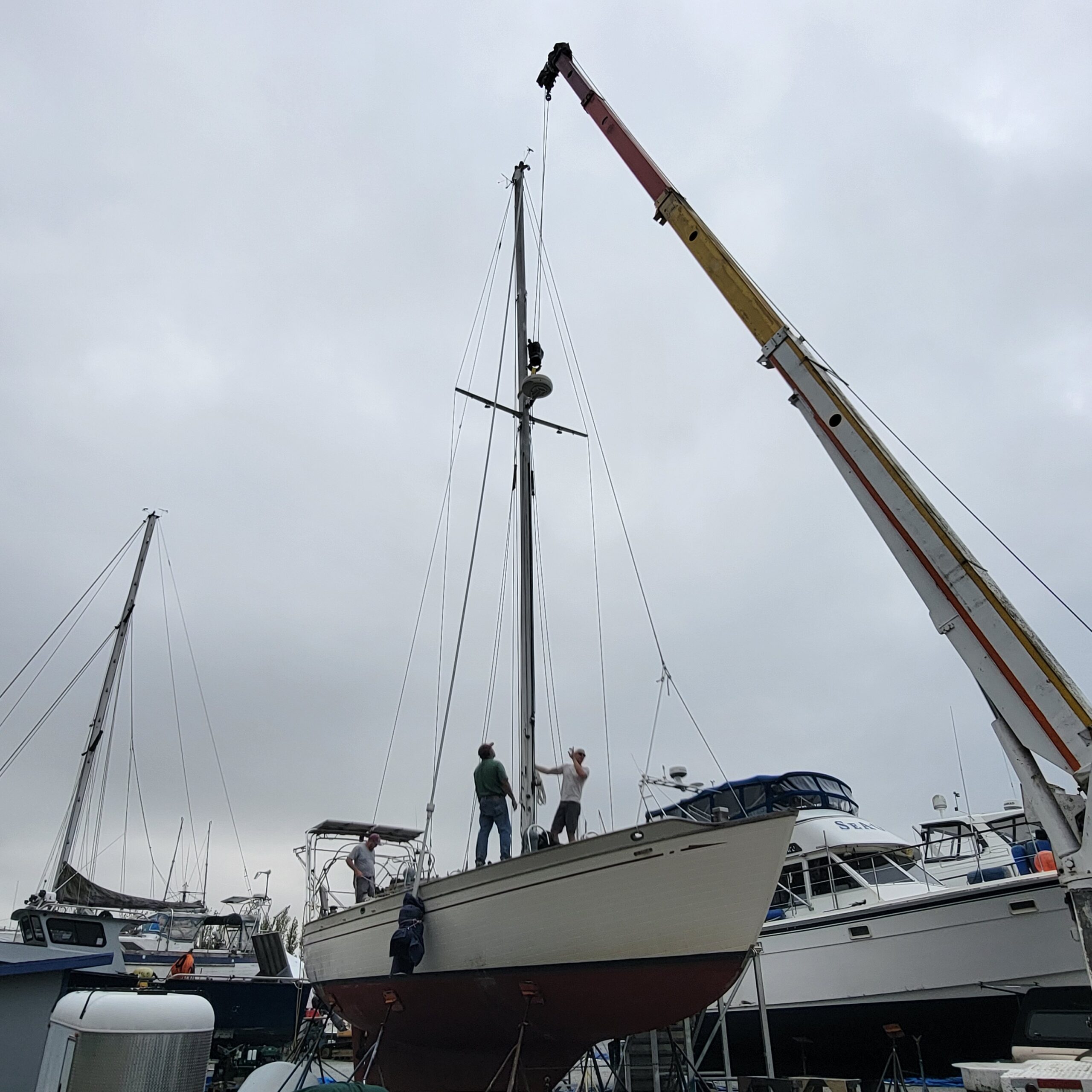
For anyone looking for a rigger in the Skagit valley, check with me if you want more info on this guy. He also happens to be the one who “lost track of a turnbuckle” when they pulled the stick to start with, ripping off a teak handrail and causing Rob weeks of work and $750 in teak to make new handrails. No apology, no offer to repair or fix, just “Oh I lost track of that one”. What a mess. We’re currently ready to rebuild the mast and talking to other riggers in Anacortes this week. Wish us luck.
